Tangerine Leaf
In Traditional Chinese Medicine (TCM), Tangerine Leaf, known as Jú Yè in Mandarin and sometimes by its alternate name Gan Ju Ye, is a valued herbal remedy. It's derived from the leaves of various tangerine species, such as *Citrus reticulata* 'Fuju' or 'Zhuju', which belong to the Rutaceae (Rue) family.
Traditional Properties and Characteristics
From a TCM perspective, Tangerine Leaf is characterized by its **bitter taste** and **neutral nature**. It primarily enters the **Liver Meridian (Jueyin Liver Channel)**, influencing its Qi aspect—meaning it helps regulate the vital energy flow associated with the liver system.
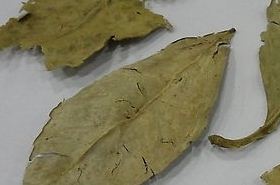
The medicinal part used is the dried leaf. These leaves often appear curled but, when flattened, present as rhombic-elliptic or oval shapes, typically measuring about 5-8 cm in length and 2-4 cm in width. Their surface is a grayish-green or yellowish-green and smooth, revealing numerous transparent glandular dots when observed against light. The texture is thick, hard, and brittle, making them prone to fracturing. Tangerine leaves emit a distinct fragrant aroma and have a bitter taste.
How to Use Tangerine Leaf (Dosage and Administration)
For internal use, Tangerine Leaf is commonly prepared as a decoction. The recommended dosage for dried leaves is 10-25 grams, while fresh leaves can be used in larger quantities of 100-200 grams. Another traditional method involves pounding the leaves into a juice for consumption.
Always consult a qualified practitioner of Traditional Chinese Medicine before using any herbal remedies to ensure proper dosage, preparation, and suitability for your specific health condition.
Benefits and Actions of Tangerine Leaf
Tangerine Leaf is highly regarded in TCM for its therapeutic actions:
- **Soothes the Liver and Promotes Qi Circulation:** It helps to harmonize the Liver's function, easing stagnation and promoting the smooth flow of vital energy (Qi) throughout the body.
- **Transforms Phlegm:** It aids in dissolving and expelling accumulated phlegm, particularly beneficial for respiratory issues.
- **Reduces Swelling and Clears Toxins:** It possesses properties that can help diminish swelling and alleviate conditions associated with toxic accumulations.
These actions make it a valuable herb for addressing various health concerns, including:
- Hypochondriac pain (discomfort in the rib cage area or sides of the abdomen)
- Breast abscesses (mastitis) and other localized breast swellings
- Lung abscesses
- Cough
- Fullness or distention in the chest and diaphragm
- Hernias
Traditional Formulas Featuring Tangerine Leaf
Throughout TCM history, Tangerine Leaf has been incorporated into various classic formulas and remedies:
- **For Cough:** Tangerine leaves (with honey applied to their underside and then fire-roasted until dry) are decocted in water and taken orally. (From *Dian Nan Ben Cao*)
- **For Lung Abscess:** Fresh green tangerine leaves, after being washed, are pounded and squeezed for their juice. One cup of this juice is consumed, with the expectation of recovery after the expulsion of pus and blood. (From *Jing Yan Liang Fang*)
- **For Chest and Diaphragm Fullness due to Febrile Disease:** Pounded tangerine leaves are mixed with flour and applied as a hot compress. (From *Ben Jing Feng Yuan*)
- **For Hernia:** Ten tangerine leaves and five roasted lychee pits are decocted in water and taken orally. (From *Dian Nan Ben Cao*)
- **For Edema (Water Retention):** A large handful of fresh tangerine leaves is decocted with sweet rice wine and consumed. (From *Gui Yang Shi Mi Fang Yan Fang*)
- **For Qi Pain and Distention:** Pounded tangerine leaves are stir-fried until warm, then applied externally as a poultice, or prepared as a decoction for internal consumption. (From *Chong Qing Cao Yao*)
- **To Kill Roundworms and Pinworms:** 200 grams of fresh tangerine leaves are boiled in water and consumed. (From *Chong Qing Cao Yao*)
Historical Perspectives on Tangerine Leaf
Esteemed TCM scholars have consistently praised the therapeutic efficacy of Tangerine Leaf:
- **From *Ben Cao Jing Shu*:** "Tangerine Leaf, though not extensively recorded in ancient and modern formularies, effectively disperses stagnant Qi in the Yangming and Jueyin meridians. It proves effective for women's conditions such as 'jealous breast' (妒乳, possibly referring to a type of mastitis or breast swelling), internal and external 'blowing' (内外吹, localized infections or swellings), breast lumps, and breast abscesses, as these conditions all arise from disorders of these two meridians." This highlights its fundamental role in addressing stagnation and promoting healthy circulation in key energetic pathways.
- **From *Ben Cao Hui Yan*:** "Tangerine Leaf is a remedy that soothes the Liver, dissipates rebellious Qi, and relieves hypochondriac pain. According to Dan Xi (the renowned physician Zhu Danxi), this herb possesses a bitter and astringent taste, a pungent aroma, and a warm, dispersing nature. For ailments involving stagnation of blood or Qi, phlegm accumulation, or rebellious fire leading to symptoms like hypochondriac pain, breast abscesses, beriberi (a nutritional disorder), swelling, or rebellious Qi in the chest and diaphragm, whether by drinking its juice or applying its dregs externally, it consistently yields prompt results." This comprehensive description underscores its broad action on various patterns of internal disharmony.
- **Zhu Zhenheng:** "It guides rebellious Qi in the chest and diaphragm, promotes the flow of Liver Qi, reduces swelling, and dispels toxicity. It is effectively used for breast abscesses and hypochondriac pain by regulating the meridians." This reinforces its impact on Qi circulation and its anti-inflammatory effects. Studies suggest that certain components in *Citrus reticulata* leaves, such as flavonoids and essential oils, may contribute to these anti-inflammatory and analgesic properties (PMID: 34208036).
- **From *Dian Nan Ben Cao*:** "It promotes Qi circulation, transforms phlegm, and descends Liver Qi. It treats conditions such as cough and hernia." This succinct summary encapsulates its primary functions, especially concerning respiratory and digestive complaints. The broad application of *Citrus* herbs in TCM, including their use for various respiratory conditions, is well-documented (PMID: 35010620). Further research on *Citrus reticulata* components generally aligns with its traditional uses for liver support and anti-inflammatory actions (PMID: 35160898).
Quick Self-Check & Self-Care
If you're experiencing a persistent, uncomfortable fullness in your chest or upper abdomen, especially if it feels worse with stress, then immediately consider whether your energy (Qi) might be feeling stuck. Try taking a few slow, deep breaths, or engage in gentle movement like walking. For persistent or severe symptoms, particularly if accompanied by sharp pain, fever, or difficulty breathing, please seek professional medical advice without delay.
For informational purposes only. Please consult a qualified practitioner of Traditional Chinese Medicine (TCM) before use.
References
Research highlights the anti-inflammatory potential of *Citrus reticulata* leaf essential oil. PMID: 34208036
Therapeutic potential of citrus flavonoids in respiratory diseases, supporting traditional uses for cough and phlegm. PMID: 35010620
A comprehensive review on the biological activities of *Citrus reticulata* Blanco and its bioactive compounds, aligning with traditional applications. PMID: 35160898