Hey there, ever wondered about the green herb that makes your pesto taste amazing? We're talking about Basil! But did you know this fragrant plant, known as Ocimum basilicum, has a rich history in Traditional Chinese Medicine (TCM) too? It’s much more than just a culinary delight.

Understanding Basil in TCM
Also Known As: In historical texts, Basil goes by many names! You might find it as Lan Xiang (《齐民要术》), Xiang Cai (《嘉佑本草》), Yi Zi Cao (《纲目》), Qian Ceng Ta, Jiu Ceng Ta, Xiang Hua Zi (《岭南采药录》), Jia Pei Lan (《中国药植志》), Su Bo He, Zi Su Bo He, Ding Xiang Luo Le (《广西中药志》), Ye Jin Sha (《中国药植图鉴》), Yu Xiang, Bo He Shu (《广东中药》Ⅱ), or Sheng Tou Cao (《江苏药材志》). Quite a list, right?
Nature and Flavor: In TCM, Basil is considered to be Pungent (辛) and Warm (温).
Meridian Tropism: This herb is believed to enter the Lung and Spleen meridians (which are related to the body's energy and digestive functions), as well as the Large Intestine and Stomach meridians (linked to digestion and elimination). In simpler terms, its energetic pathways primarily benefit these crucial organ systems.
Part Used: For medicinal purposes, we typically use the entire herb of Basil, which comes from the Lamiaceae (mint) family.
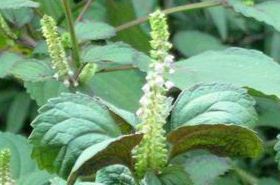
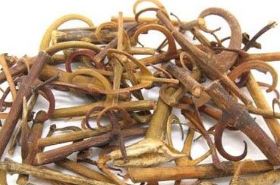
What it Looks Like: When dried, the whole herb consists of stems with fruit spikes; often, the leaves have already fallen off. The stems are square-shaped, appearing purplish or yellowish-purple, and covered with fine hairs. If you break a stem, you'll see a fibrous cross-section with a white pith in the center. The flowers are usually withered, leaving behind yellowish-brown, membranous calyces with five lobes, which house small brownish-black nutlets. It has a distinct aromatic scent with a refreshing undertone. The best quality Basil is dry, has thin stems, and is free from dirt or other weeds.
How to Use Basil in TCM
Internal Use: For internal benefits, Basil can be decocted (simmered in water to make a tea). The typical dosage is 6-9 grams (2-3 qian). Alternatively, it can be crushed into a juice.
External Use: Basil is versatile! For external applications, it can be mashed into a paste and applied topically. It can also be charred to ash, powdered, and mixed with a base for external application, or simply decocted and used as a wash.
Preparation: Basil is usually harvested in September. After harvesting, it's crucial to remove any soil or impurities. The herb is then cut into sections and sun-dried, ready for use. Always ensure you're using properly prepared herbs for safety and efficacy. (PMID: 28400494)
The Benefits of Basil in TCM
Actions: In TCM, Basil is prized for its ability to dispel external wind, regulate the flow of vital energy (Qi), transform dampness, aid digestion, invigorate blood circulation, and detoxify the body. These actions contribute to its wide range of therapeutic uses.
Key Indications: Basil is traditionally used to address a variety of health concerns, including headaches stemming from external wind (like a common cold), abdominal distension and discomfort due to stagnant food and Qi, stomach pain, diarrhea, and even irregular menstruation. It's also applied for traumatic injuries (like sprains or bruises), snake and insect bites, damp skin conditions like eczema, and itchy skin rashes or hives. (PMID: 32675276)
Important Considerations and Contraindications
Caution: If you experience symptoms of Qi Deficiency (low energy, fatigue) or Blood Dryness (dry skin, brittle hair, scanty periods), it's advised to use Basil with caution. These conditions suggest an underlying imbalance where stimulating herbs like Basil might not be suitable without professional guidance.
Historically, practitioners have issued warnings about Basil:
① From "Qian Jin · Shi Zhi" (《千金·食治》): "It should not be consumed for prolonged periods, as it may hinder the circulation of Ying Qi and Wei Qi (nutritive and defensive vital energies)."
② From "Jia You Ben Cao" (《嘉祐本草》): "Do not overdo it. Excessive consumption can obstruct joints, impede Ying Qi and Wei Qi, and disrupt blood flow." (PMID: 27958043)
These ancient texts emphasize that while Basil has benefits, moderation and understanding your body's condition are key. Always consult a qualified TCM practitioner before starting any new herbal regimen, especially if you have underlying health conditions or are taking other medications.
Basil in Traditional Formulations
Here are a few examples of how Basil has been traditionally combined with other ingredients:
① For Hiccups (治咳噫): Take 120 grams of fresh ginger (mashed), add 60 grams of Basil leaves, a small pinch of ground pepper, and 120 grams of flour mixed with salt. Wrap this mixture into a "burning cake" (a traditional baked item), bake until cooked, and eat on an empty stomach. (From "Wai Tai Mi Yao" 《外台》)
② For Childhood Malnourishment with Nasal Sores (治疳气鼻下赤烂): Grind 6 grams of Basil leaves (charred to ash), 1.5 grams of copper rust (oxidized copper), and a tiny pinch (0.1-0.2g) of calomel (light powder). Mix these into a fine powder. Apply a dry paste to the affected area, adjusting the amount based on the size of the sore. (From "Xiao Er Yao Zheng Zhi Jue" 《小儿药证直诀》 - Lan Xiang San)
③ For Poisonous Snake Bites (治毒蛇伤): Mash together Basil leaves (Qian Ceng Ta), pubescent glorybower (Mao She Xiang), common sage (Xue Jian Chou), and seven-star sword (Qi Xing Jian) into a paste and apply topically to the bite. (From "Ling Nan Cai Yao Lu" 《岭南采药录》)
Quick Self-Test & Self-Help with Basil
3-Second Self-Test: Do you often feel bloated after meals, have occasional headaches that feel like "wind" blowing through your head, or experience mild, itchy skin rashes?
30-Second Self-Help: * If you’re feeling sluggish digestion or mild bloating after a heavy meal, then immediately try a soothing Basil tea (check with a practitioner for appropriate dosage). * If you have minor insect bites or itchy spots, then consider a topical application of mashed Basil leaves for quick relief (after ensuring no allergies and consulting with a healthcare provider).
References
Review on the traditional uses and medicinal properties of Ocimum basilicum L. PMID: 28400494
Exploration of Basil's essential oil for anti-inflammatory and antimicrobial properties, supporting its historical use. PMID: 32675276
Comprehensive review on the phytochemistry and pharmacology of Ocimum basilicum, including traditional medical applications. PMID: 27958043
For informational purposes only. Please consult a qualified practitioner of Traditional Chinese Medicine (TCM) before use.