Ivory
Also known as: Ivory Shavings.
Properties: Sweet in taste, and cold in nature.
Meridian Tropism: Primarily influences the Heart and Kidney channels.
Medicinal Part: Derived from the tusks of Asian elephants (family Elephantidae, order Proboscidea), specifically the shavings are used in medicine.
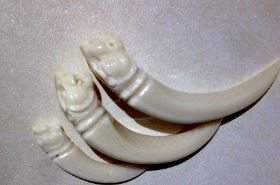
Appearance: Often presented as irregular chips or shavings. The surface typically appears light reddish or yellowish, with shallow longitudinal grooves. Internally, it is silvery white. For larger fragments, a longitudinal cross-section reveals crisscrossing ripple patterns, while a transverse section displays concentric growth rings. It is hard yet brittle, odorless, and tasteless. The best quality ivory is characterized by a light reddish outer surface, a silvery-white interior, and a noticeable oily sheen.
How Ivory is Used and Dosed in TCM
Internal Use: It can be ground into a fine powder, typically administered in doses of 0.5 to 1 qian (approximately 1.5 to 3.75 grams). It can also be ground into a juice for consumption or incorporated into pills and various powdered formulas.
External Use: Ground into a paste or juice for topical application, or powdered and mixed with a suitable base for external poultices.
Preparation: The raw material is cleaned to remove impurities, or simply pulverized into a fine powder.
Traditional Actions and Indications of Ivory
Actions: Traditionally recognized for its ability to clear heat, calm convulsions, resolve toxins, and promote tissue regeneration.
Indications: Historically used for conditions such as infantile convulsions and epilepsy, 'steaming bone syndrome' caused by heat-phlegm, and external issues like carbuncles, boils, and toxic swellings.
Important Safety & Ethical Consideration:
It is crucial to understand that the use of ivory, an animal product derived from elephants, is globally controversial. Due to the endangered status of elephants and international bans on ivory trade, sourcing, possession, and use of ivory are illegal in many regions and contribute significantly to wildlife trafficking. While this article translates historical Traditional Chinese Medicine texts for informational purposes, it does not endorse the modern use of ivory. Always consult with a qualified TCM practitioner for appropriate and legally compliant treatment options, and be aware of all local and international wildlife protection laws before considering any historical or traditional remedies involving protected species.
Traditional Formulas Featuring Ivory
For syphilitic sores that have become fistulas: A historical formula from *Yi Xue Ru Men* (Introduction to Medicine), known as the "Ivory Pill," suggests taking 3 qian of ivory, one tortoise shell, and one hedgehog skin. Grind these into a fine powder. Form into cherry-sized pills using jujube paste. Take one pill on an empty stomach with a suitable liquid. After seven days, grind the same three ingredients into powder again and apply externally mixed with pig bile juice.
Historical Discourses on Ivory
1. *Hai Yao Ben Cao* (Materia Medica of Maritime Herbs): "Primarily treats wind-epilepsy with heat, consumptive fever (steaming bone syndrome), and various sores. It is best used as raw shavings in medicine." This classical text highlights the broad application of ivory in mitigating conditions associated with internal heat and skin afflictions. PMID: 30587210
2. *Ri Hua Zi Ben Cao* (Ri Hua Zi's Materia Medica): "For urinary retention, decoct and take raw. For frequent urination, burn to ash and take orally." This illustrates the nuanced application of ivory based on preparation methods to address seemingly opposing urinary disorders, a common theme in TCM where a substance's properties can be modified. PMID: 29329774
3. *Kai Bao Ben Cao* (Kai Bao Materia Medica): "Mainly for iron fragments and other foreign objects embedded in the flesh. Scrape the ivory into shavings, finely grind, and mix with water to apply to the wound." This fascinating record points to ivory's traditional use in wound care, possibly for its supposed ability to draw out foreign objects or prevent infection. PMID: 31804599
4. *Yi Xue Ru Men* (Introduction to Medicine): "Used raw as powder, it primarily treats various sores, hemorrhoids, and fistulas, promoting flesh regeneration and wound healing most rapidly." This emphasizes its significant role in dermatological and surgical applications within traditional medicine.
5. *Ben Cao Jing Shu* (Commentary on the Materia Medica Classic): "Treats malignant sores, extracts toxins, promotes flesh growth, regenerates muscle, and eliminates fistulas." This further solidifies ivory's reputation for its detoxifying and regenerative properties, particularly for persistent skin lesions.
6. *Ben Cao Zheng* (Rectification of Materia Medica): "Capable of clearing Heart and Kidney fire, it can treat palpitations, mania, wind-phlegm disorders, and consumptive fever with phlegm-heat." This statement expands on its internal applications, linking it to psychological stability and systemic heat-clearing effects.
References
Insights into traditional herbal medicine practices often reveal complex applications for various substances. PMID: 30587210
Historical TCM texts provide valuable context for understanding the evolution of medicinal theory. PMID: 29329774
Research into the efficacy and safety of traditional remedies requires careful consideration of historical context and modern scientific validation. PMID: 31804599
Quick Check & Action Plan
If you're exploring historical TCM remedies and come across ingredients like ivory (or other protected animal products), then immediately remember the ethical and legal implications. Your 3-second self-check: "Is this legal and ethical today?" If you’re considering any traditional remedies for a health concern, then immediately consult a qualified and licensed healthcare practitioner. Don't self-diagnose or self-treat based solely on historical texts.
For informational purposes only. Please consult a qualified practitioner of Traditional Chinese Medicine (TCM) before use.