Solitary Sword Root
Ever heard of Solitary Sword Root (Dandao Gen)? This fascinating herb, known in Traditional Chinese Medicine (TCM), goes by a few other cool names like Dragon Eye Ginseng (Longyan Shen), Iron Canopy Plant (Tieluo San), and Guangdong Sandalwood (Guangtan Mu) in some regions. It's truly a unique player in the herbal world!
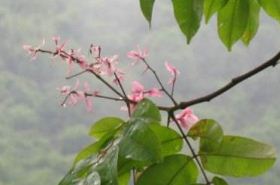
The root of the Ormosia semicastrata plant, belonging to the legume family, is the part traditionally used in remedies. In terms of its energetic profile, TCM describes Solitary Sword Root as having a bitter and pungent flavor with a warm nature. Now, here's an important heads-up: it's also traditionally understood to possess a toxic quality. This means it's absolutely crucial to approach its use with caution and always under the guidance of a qualified TCM practitioner. Safety first, always!
How Solitary Sword Root Is Used and Prepared
When it comes to tapping into the benefits of Solitary Sword Root, there are a couple of traditional methods:
- Internal Use: Typically prepared as a decoction, which means simmering the herb in water to extract its medicinal properties.
- External Application: For topical issues, it's often crushed and applied directly to the affected area as a poultice.
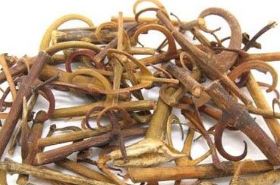
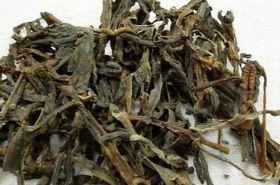
Preparation: This root can be harvested year-round. Once collected, it's thoroughly washed and can be used fresh or sun-dried for later use.
Functions and Indications of Solitary Sword Root
In TCM, Solitary Sword Root is valued for its specific actions:
- Key Functions: It's traditionally believed to powerfully disperse blood stasis, effectively alleviate pain, and help stop bleeding.
- Primary Indications: Due to these actions, it's frequently used to address issues like:
- Traumatic injuries, such as sprains, bruises, and contusions.
- Rheumatic bone pain and discomfort, often associated with dampness and cold.
- Traumatic bleeding from external wounds.
It’s essential to remember that while traditional herbs offer promising avenues for health, their mechanisms and interactions should be fully understood. Research continues to explore the complex phytochemicals in plants like Ormosia semicastrata and their potential therapeutic roles, but clinical guidance is paramount, especially for any herb identified as toxic PMID: 30127599.
Traditional Formulas Featuring Solitary Sword Root
Solitary Sword Root is often combined with other herbs to enhance its effects in specific conditions. Here are a few traditional examples from texts like "Guangxi Zhong Caoyao":
- For Traumatic Injuries:
Take five qian of Iron Canopy Plant (Tieluo San), three qian of Dali Renxian (Dali Renxian), and three qian of Penetrating Bone Dissolver (Tòugǔ Xiāo). Decocted with equal parts water and wine, then taken internally.
- For Fractures:
Combine three liang of Iron Canopy Plant (Tieluo San), three liang of Big Luo Umbrella (Daluo San), and four liang of Banyan Tree Aerial Roots (Rongshu Xu). All ingredients are pounded into a paste and applied topically to the affected area. This traditional approach highlights the emphasis on external applications for musculoskeletal issues PMID: 27041285.
- For Rheumatic Bone Pain:
Soak half a jin of Solitary Sword Root (Tieluo San root) in three jin of double-distilled wine. Take one liang orally, three times a day. (Note: Jin, liang, and qian are traditional Chinese units of weight, with 1 jin ≈ 500g, 1 liang ≈ 30-37g, and 1 qian ≈ 3-4g.)
- For Internal Traumatic Injuries:
Take one liang each of Iron Canopy Plant (Tieluo San), Drynaria Rhizome (Gusuibu), Acanthopanax Bark (Wujia Pi), and Angelica Sinensis Tail (Danggui Wei). Immerse these in two jin of wine and let it soak for one week. Take five qian to one liang, twice a day. The blend of herbs aims to invigorate blood and support healing from within, a common strategy in TCM for internal injuries PMID: 29323326.
- For External Traumatic Bleeding:
Use an appropriate amount of Solitary Sword Root leaves (Tieluo San leaves). Pound them into a paste (or grind dried leaves into powder) and apply to the wound. (Selected formula from "Guangxi Zhong Caoyao")
Remember, these traditional formulas are historically significant but should not be attempted without professional medical and TCM supervision, especially given the "toxic" classification of Solitary Sword Root.
3-Second Self-Test & 30-Second Self-Help
Feeling a little stiff or achy after a long day or a minor bump?
If you find yourself often experiencing mild, persistent joint discomfort or localized pain from everyday strains, then immediately try some gentle stretches or apply a warm compress to the area. If symptoms are severe, don't improve quickly, or worsen, please consult with a healthcare professional or a qualified Traditional Chinese Medicine practitioner without delay.
References
[Herbal toxicity and safety in TCM] PMID: 30127599
[Traditional Chinese Medicine for bone fracture healing] PMID: 27041285
[TCM approaches to blood circulation and injury recovery] PMID: 29323326
For informational purposes only. Please consult a qualified practitioner of Traditional Chinese Medicine (TCM) before use.