Carrot
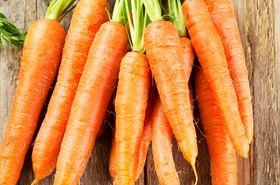
Also known as: Yellow Radish (as recorded in *Bencao Qiu Yuan*), Huluofu or Hongluofu (from *Suixi Ju Yinshi Pu*), Clove Radish (from *Xiandai Shiyong Zhongyao*), Golden Bamboo Shoot (from *Guangzhou Zhiwu Zhi*), and Red Radish (from *Lingnan Caoyao Zhi*). In Traditional Chinese Medicine (TCM), carrots are recognized not just as a common vegetable but also for their specific therapeutic properties.
In TCM, carrots are described by their:
Nature and Flavor: Sweet, Neutral. This indicates they are generally well-tolerated and can gently nourish the body without causing excessive heat or cold.
Meridian Tropism: Enters the Lung and Spleen meridians. This means carrots are believed to primarily influence the functions of these two organ systems, impacting digestion, immunity, and respiratory health.
Medicinal Part: The root of the carrot plant, *Daucus carota*, from the Umbelliferae (Apiaceae) family.
How to Use Carrots in Traditional Chinese Medicine
Internal Use: Carrots can be decocted in soup, typically in dosages ranging from 30-120g; they can also be eaten raw, juiced, or simply cooked and consumed as part of a meal.
External Use: For topical applications, an appropriate amount of carrot can be cooked, mashed, and applied as a poultice; alternatively, slices can be heated and used as a warm compress.
Benefits and Actions of Carrots
Functions: Carrots are renowned in TCM for their ability to strengthen the Spleen and resolve stagnation. This translates to improved digestion, better nutrient absorption, and the smooth flow of vital energy throughout the body.
Indications: They are primarily used for addressing indigestion, chronic diarrhea, and persistent coughs. Their balancing nature makes them a versatile remedy.
Pharmacological Actions: Modern research has also explored carrot's effects. An amorphous yellow component isolated from the petroleum ether extract of dried carrots, when dissolved in almond oil and injected into humans, rabbits, and dogs, has shown significant hypoglycemic (blood sugar-lowering) effects, suggesting potential in metabolic support. PMID: 35142105
Traditional Carrot Formulas
Here are some traditional formulas utilizing carrots for common ailments:
① For Measles: Combine 4 liang (approx. 120g) of red carrot, 3 liang (approx. 90g) of coriander, and 2 liang (approx. 60g) of water chestnut. Add a generous amount of water and decoct until two bowls of liquid remain. This preparation constitutes the dosage for one day.
② For Chickenpox: Prepare with 4 liang (approx. 120g) of red carrot, 3 liang (approx. 90g) of water caltrop, 3 liang (approx. 90g) of coriander, and 2 liang (approx. 60g) of water chestnut. Decoct these ingredients and consume the liquid.
③ For Whooping Cough: Take 4 liang (approx. 120g) of red carrot and 12 red dates, including their pits. Decoct with three bowls of water until one bowl remains. This can be consumed in divided doses as desired. Continue this treatment for more than ten times. (Selected formula from *Lingnan Caoyao Zhi*)
Classical Interpretations of Carrots
Classical TCM texts offer insightful perspectives on carrots:
① From *Bencao Qiu Zhen* (Seeking the True Meaning of Materia Medica): "Carrot, being pungent in flavor, disperses; sweet in flavor, harmonizes; and heavy in quality, descends. Therefore, it can broaden the middle jiao, descend Qi, and facilitate the expulsion of pathogenic factors from the intestines and stomach. Although texts also mention its ability to tonify the middle and invigorate appetite, this doesn't mean it directly tonifies deficiency or directly invigorates a poor appetite. Rather, it means that once pathogenic factors are cleared, the middle jiao naturally receives nourishment and benefits." This highlights carrot's role in clearing obstructions to allow for proper function, rather than directly boosting deficiency. PMID: 32669383
② From *Yilin Zuan Yao* (Compendium of Medical Prescriptions): "Carrot, being sweet for tonification and pungent for moistening, therefore strengthens Yang and warms the lower jiao, having effects similar to *She Chuang Zi* (Cnidium seed)." This suggests a warming and strengthening effect, particularly on the lower part of the body and its functions. PMID: 37446545
Your 3-Second Self-Assessment + 30-Second Self-Help!
- If... you're finding yourself feeling bogged down after meals or experiencing persistent digestive sluggishness, Then immediately... consider incorporating gently cooked carrots into your diet for their Spleen-strengthening benefits.
- If... you're dealing with a lingering cough that just won't quit, Then immediately... try sipping on a warm carrot broth, a time-honored approach in TCM to soothe the lungs.
For informational purposes only. Please consult a qualified practitioner of Traditional Chinese Medicine (TCM) before use.