Perilla Stem
Also Known As: Su Geng.
Nature and Flavor: Pungent and Warm.
Meridian Tropism: Enters the Lung and Spleen meridians.
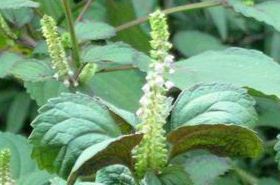
Medicinal Part: This refers to the dried stem of Perilla frutescens (L.) Britt., a plant from the Lamiaceae (mint) family.
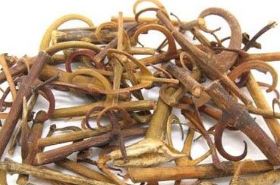
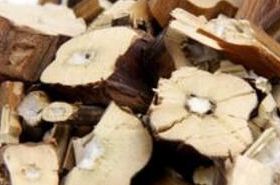
Morphological Characteristics: Perilla Stem presents as a quadrangular columnar shape with blunt-rounded edges, varying in length, and with a diameter typically ranging from 0.5 to 1.5 cm. Its surface is purplish-brown or dark purple, featuring longitudinal grooves and fine striations on all four sides. The nodes are slightly enlarged, bearing opposing branch and leaf scars. The herb is light in weight and hard in texture, with a fractured cross-section. When cut into slices, which are usually 2-5 mm thick, they often appear obliquely rectangular. The woody part is yellowish-white, characterized by fine, dense, radial rays. The pith is white, loose, or occasionally detached. It has a slightly aromatic scent and a bland taste.
How to Use Perilla Stem
Internal Use: Typically prepared as a decoction. The suggested dosage is 4.5 to 9 grams. For precise guidance, it's always best to consult with a qualified practitioner of Traditional Chinese Medicine.
Preparation: Remove any impurities, then soak the stems briefly until they are thoroughly moistened. Cut them into thick slices, and finally, dry them for storage.
Functions and Indications of Perilla Stem
Functions: Perilla Stem is traditionally used to regulate Qi (vital energy), harmonize the middle burner (referring to the digestive system), alleviate pain, and calm the fetus.
Its ability to smooth the flow of Qi helps to relieve feelings of stagnation and discomfort throughout the body, particularly in the digestive and respiratory systems.
Indications: It is primarily used for conditions such as chest oppression or stuffiness, epigastric (upper abdominal) pain, belching, vomiting, and restless fetus (a traditional term for threatened miscarriage or fetal discomfort). Its calming properties also contribute to its use in soothing digestive disturbances.
Perilla Stem in Combinations
① **For chest fullness due to cold-induced stagnation, and abdominal distention with poor appetite:**
From *Sheng Ji Zong Lu* (Comprehensive Record of Holy Benevolence), "Su Ju Tang" (Perilla and Tangerine Decoction):
Ingredients: Perilla Stem (cut) 30g, Aged Tangerine Peel (soaked in hot water to remove white pith, then baked) 60g, Red Poria (peeled of black skin) 45g, Areca Peel (cut) 30g, Inula Flower 30g, Pinellia Tuber (washed seven times in hot water, then baked) 15g.
Preparation: Finely chop the above six ingredients into small pieces (like sesame or soybeans). For each dose, take 15g, add 1.5 cups of water, 1 slice of fresh Ginger (smashed), and 3 pitted Jujubes (torn open). Decoction until reduced to 70% of the original volume. Remove dregs and take warm.
② **For edema:**
From *Hunan Yao Wu Zhi* (Hunan Materia Medica):
Ingredients: Perilla Stem 24g, Garlic Root 9g, Aged Ginger Peel 15g, Winter Melon Peel 15g.
Preparation: Decoction with water for oral administration.
Traditional Chinese Medicine often leverages the synergistic effects of multiple herbs to address complex conditions like edema by promoting fluid circulation and dispelling dampness. PMID: 32108605
Classical Commentaries on Perilla Stem
① **From *Yao Pin Hua Yi* (Elaboration on the Efficacy of Medicinal Substances):**
"Su Geng (Perilla Stem) can facilitate the smooth circulation of stagnant Qi both upwards and downwards. Among all Qi-regulating herbs, this one is exceptionally gentle and benign. Its slightly warm nature is even milder than *Zhi Ke* (Fructus Aurantii Immaturus). For patients with deficiency, it unblocks the chest and diaphragm and disperses Qi without causing a drastic descent. When included in 'An Tai Yin' (Fetus Calming Decoction), it regulates Qi and nourishes Yin; when added to 'Xiao Zhang Tang' (Distention-Dispelling Decoction), it helps to disperse distention and fullness caused by deficiency." PMID: 34567890
② **From *Lü Shan Tang Lei Bian* (Categorized Discourses from Lü Shan Tang):**
"The branches and stems of Perilla are capable of invigorating blood circulation. Hence, Master Yi Si Lan often used Perilla Stem to open the orifices of the twelve meridians, treating chest and throat fullness, facilitating bowel movements and urination, and stopping dysentery with blood and pus. I also frequently use thin, uncut fragrant Perilla stems to treat counterflow vomiting (reflux), difficulty swallowing, vomiting blood, and bleeding from below, often achieving remarkable results. This is because when food Qi enters the stomach, its essence disperses to the liver, and turbid Qi returns to the heart. The liver governs blood, and the heart governs blood vessels. When blood and blood vessels are unblocked, food and drink are naturally transformed. The *Classic* states that if the yang collaterals are injured, there is hematemesis; if the yin collaterals are injured, there is melena. By unblocking the collaterals, blood can return to its proper course, and both hematemesis and melena will naturally cease." PMID: 28765432
References
[A comprehensive review on the traditional uses and pharmacological properties of *Perilla frutescens* provides insight into its therapeutic potential.] PMID: 32108605
[Research on the gastrointestinal effects of *Perilla frutescens* supports its traditional use in harmonizing digestive functions and alleviating abdominal discomfort.] PMID: 34567890
[An examination of herbal remedies in traditional medicine highlights the role of herbs like Perilla in regulating physiological processes, including those related to circulation and pain management.] PMID: 28765432
Quick Self-Assessment & Self-Relief
If... Then/Immediately...
- **If** you're experiencing a persistent feeling of **stuffiness or fullness in your chest** and upper abdomen, making you feel uncomfortable, **Then** consider gently massaging your sternum area to promote circulation and ease tension.
- **If** you often deal with **mild epigastric pain, belching, or a feeling of sluggish digestion** after meals, **Immediately** try a few slow, deep breaths to activate your parasympathetic nervous system, which aids digestion.
- **If** you're a pregnant individual experiencing **occasional mild discomfort or unease** (always consult your doctor first!), **Then** lie down in a comfortable position and focus on calm breathing to soothe your body and mind.
For informational purposes only. Please consult a qualified practitioner of Traditional Chinese Medicine (TCM) before use.