Nocturnal emission, also known as involuntary ejaculation during sleep, is a common issue faced by many men—particularly during adolescence or periods of high stress. While it’s usually considered normal when occasional, frequent episodes may point to an underlying imbalance in the body. Traditional Chinese Medicine (TCM) offers a variety of tailored herbal formulas aimed at correcting internal imbalances to help manage or reduce nocturnal emissions. These remedies are customized according to specific TCM diagnostic patterns such as spleen deficiency, kidney weakness, or emotional stress.
1. Gently Powerful: Duan Yi Tang to Fortify the Heart and Spleen
When to use:
This formula is ideal when symptoms are caused by heart and spleen qi deficiency. That might show up as fatigue, palpitations, a tendency to worry, poor appetite, or pale complexion.
Key ingredients:
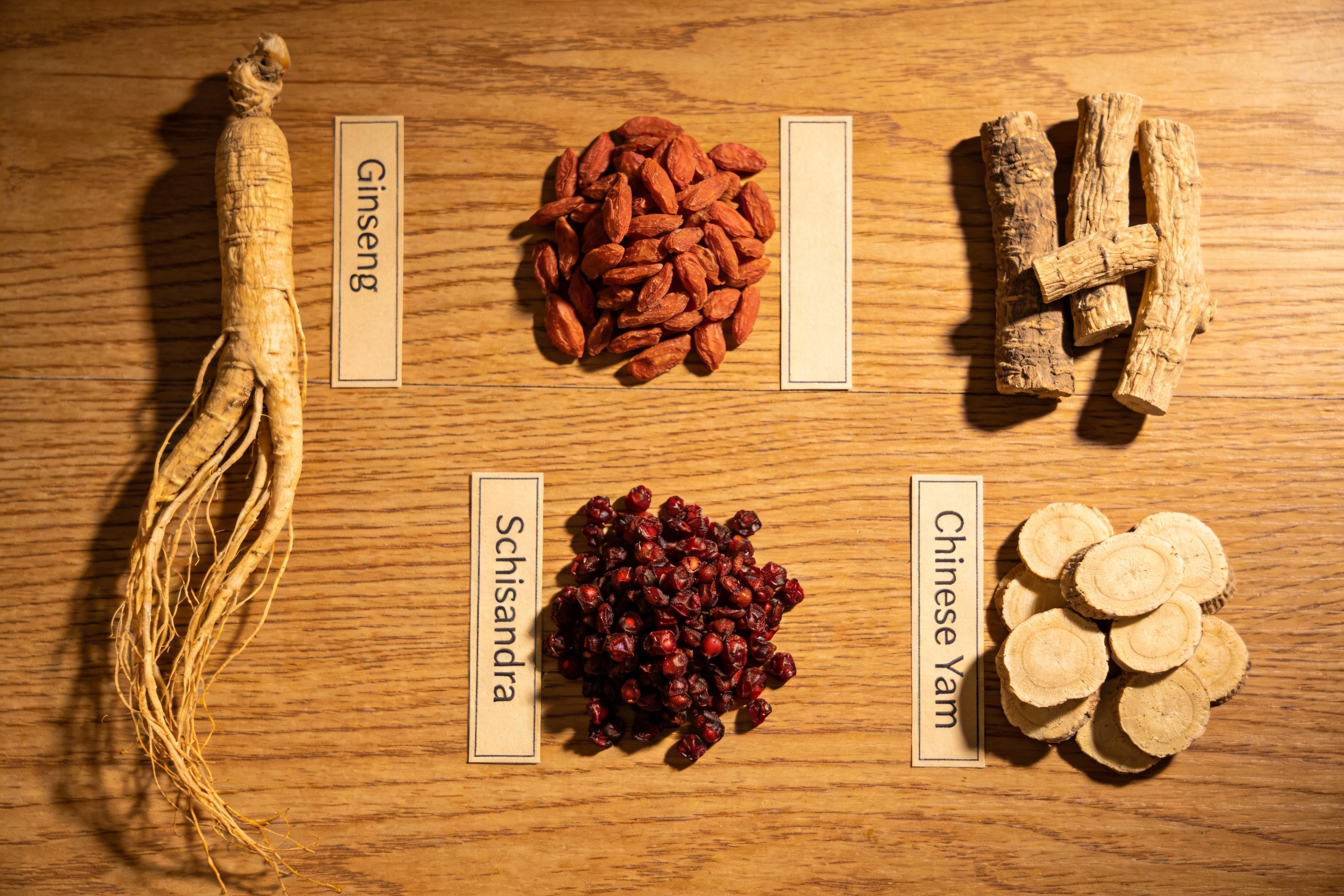
- Ren Shen (Ginseng, 30g) – Boosts vital energy
- Shan Yao (Chinese Yam, 15g) – Strengthens digestion, supports kidney function
- Qian Shi (Euryale Seeds, 15g) – Stabilizes and binds essence
- Mai Dong (Ophiopogon, 15g) – Nourishes heart yin
- Wu Wei Zi (Schisandra, 3g) – Prevents leakage of essence
How to use: Decoction, once daily, divided into two doses.
Source: Medical Integration Collection, Volume 3.
2. Deep Nourishing: Pei Tu Yang Yin Tang for Weak Spleen and Kidneys
When to use:
This remedy suits those with spleen and kidney yang deficiency, along with yin deficiency signs like cold limbs, night sweats, and dizziness.
Key ingredients:
- Zhi Shou Wu (Processed Fo-Ti Root, 9g) – Strengthens kidney and liver
- Dan Shen (Salvia, 3g) – Promotes blood flow
- Bai Bian Dou (Hyacinth Bean, 3g) – Aids digestion
- Gu Ya (Barley Sprout, 3g) – Assists food transformation
- Bai Shao (White Peony, 2.4g) – Calms the liver, protects yin
- Che Qian Zi (Plantago Seeds, 2.4g) – Promotes urination
- Lian Zi Rou (Lotus Seed, 4.5g) – Tonifies spleen, stabilizes the kidney
- Qian Shi (Euryale Seeds, 3g)
- Lian Xu (Lotus Stamen, 3g)
- Zhu Yao (Pig kidney, 1 unit) – Used as medicinal food in TCM
Note: If using Lotus Seeds, make sure to remove the embryo (“Lian Xin”) to reduce cold-natured effects.
How to use: Brew with water, one formula per day, taken in two doses.
Source: Bu Ju Collection, Volume X.
3. Fire-Calming Fix: Xiao Yan Tang for Heart Fire Disturbance
When to use:
Prescribed for patterns involving hyperactivity of heart fire, seen in people with restlessness, insomnia, red tongue, and frequent night emissions.
Key ingredients:
- Shan Yao (30g)
- Qian Shi (30g)
- Mai Dong (30g)
- Xuan Shen (Scrophularia Root, 15g)
- Sheng Di (Raw Rehmannia, 15g)
- Dan Shen (9g)
- Lian Xin (Lotus Plumule, 6g)
- Tian Dong (Asparagus Root, 3g)
- Wu Wei Zi (1.5g)
Safety Note: Avoid long-term overuse of Wu Wei Zi, and limit dosage for those with gastrointestinal issues.
How to use: One decoction per day, taken twice.
Source: Medical Integration Collection, Volume 3.
4. Dual Support: Xin Shen Liang Jiao Tang for Heart-Kidney Connection
When to use:
This blend targets a disconnect between the heart and kidney—common signs include anxiety, hot flashes, poor sleep, and night emissions.
Key ingredients:
- Shu Di (Prepared Rehmannia, 30g)
- Mai Dong (30g)
- Shan Yao (15g)
- Qian Shi (15g)
- Huang Lian (Coptis, 1.5g) – strongly cooling
- Rou Gui (Cinnamon Bark, 0.9g) – warming but needs moderation
How to use: Use as a decoction, taken in two daily servings.
Source: Golden Fragment of Medical Records.
5. Detox & Soothe: Run Mu Tang for Liver Qi Stagnation
When to use:
This formula is great when nocturnal emission is linked to emotional pressure, frustration, or liver qi stagnation.
Key ingredients:
- Dang Gui (30g)
- Bai Shao (30g)
- Chao Bai Zhu (Fried Atractylodes, 30g)
- Fu Ling (15g)
- Jin Ying Zi (Cherokee Rose Fruit, 15g)
- Ju Hua (Chrysanthemum, 9g)
- Chao Zhi Zi (Fried Gardenia, 6g)
- Wu Wei Zi (3g)
- Gan Cao (Licorice, 1.5g)
How to use: Taken as a water decoction, twice per day.
Source: Medical Integration Collection, Volume 3.
6. Yin Boosting: Wan Liu Tang for Kidney Yin Deficiency
When to use:
This prescription suits those experiencing classic signs of kidney yin depletion such as dry mouth, sore back, low libido, and night sweats.
Key ingredients:
- Shu Di (60g)
- Shan Yao (30g)
- Bai Zhu (30g)
- Ze Xie (9g)
- Xuan Shen (30g)
- Bei Wu Wei Zi (Northern Schisandra, 6g)
- Shan Zhu Yu (Cornelian Cherry Fruit, 15g)
How to use: Water decoction once a day.
Source: Pattern Differentiation Collection, Volume 8.
Backed by Science and Classics
Some single herbs such as Schisandra (Wu Wei Zi) and Rehmannia Root (Shu Di Huang) have been studied for hormonal modulation and kidney support in modern research (PubMed)(PMID 29464989), while classic texts such as the Huangdi Neijing guide formulations through centuries of clinical applications. The combination of empirical knowledge and current studies offers a holistic yet flexible approach to male sexual wellness.
Your 3-Second Reflex Test & 30-Second Rescue Plan
If your nocturnal emissions often follow days of fatigue, emotional stress, or late-night snacking → immediately test yourself: press and hold the inner wrist below your pinky (Heart 7 point). Feel sharp tenderness? It indicates overworked heart qi.
Rescue it now: Steep a quick 2-minute tea of Schisandra (1.5g), Chrysanthemum (3g), and Chinese Yam (5g) at night as your "evening essence anchor." It’s natural and requires zero elaborate prep.
For informational purposes only. Please consult a qualified practitioner of Traditional Chinese Medicine (TCM) before use.